


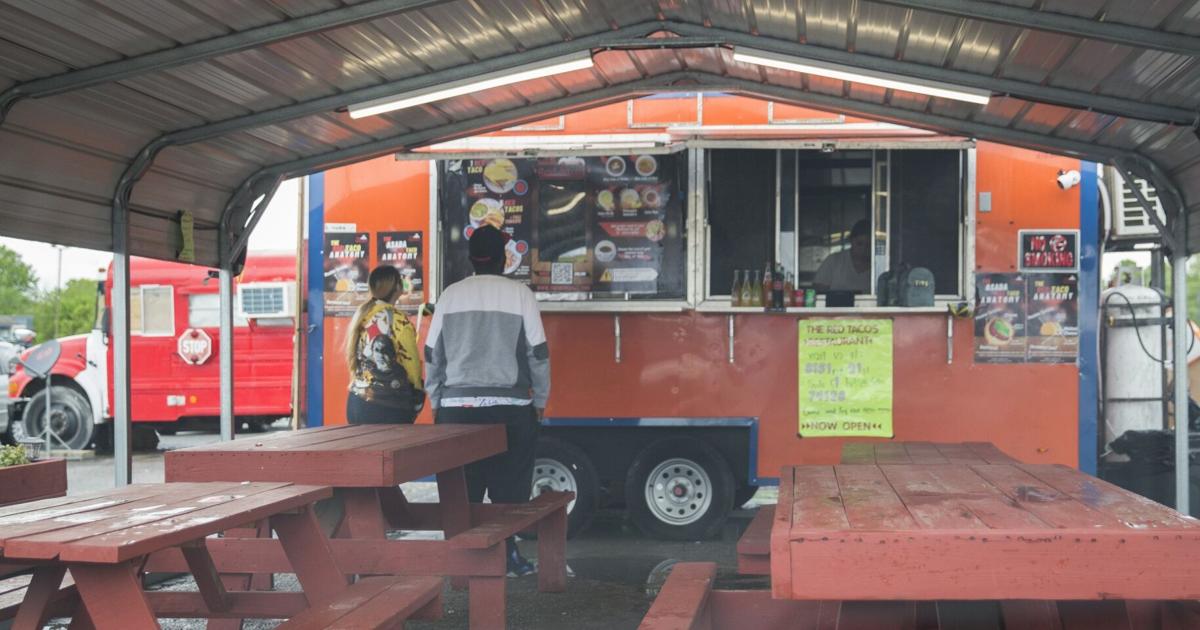
To diversify Tulsa’s small businesses and startup platforms, local officials plan to create a $5 million incubator dedicated to immigrant entrepreneurs.
A center called 21st Street Market would be located in the East 21st Street and South Garnett Road commercial corridor, also known as the Tulsa Global District.
“Essentially, the mission of the 21st Street Market would be to develop an ecosystem of support for immigrant entrepreneurs throughout metro Tulsa and promote intercity tourism,” Rodrigo Rojas, deputy chief of staff for the mayor’s office, said by phone. “We hope this really serves as a model for inclusive economic growth.”
The concept was presented to the City Council on April 20, and the city recently approved $1 million in American Rescue Plan Act funds for the project. The Tulsa Authority for Economic Opportunity plans to acquire property on an undisclosed site in the 21st and Garnett area, renovate 14,000 square feet for the incubator and rehabilitate a parking lot.
People also read…
Business training, access to capital and a support network would be part of the center, as well as a multi-purpose outdoor space to host food trucks, farmers’ markets and more. An internationally themed retail space for pop-up shops would also be available.
A total of $2.8 million is planned for the acquisition of the assets, with the balance earmarked for renovations ($2.26 million) and multi-purpose outdoor space ($100,000). Supporters of the initiative — they want to launch a launch strategy after finalizing the purchase of the property by the end of the year — will seek additional funding from other government sources and philanthropic groups, Rojas said .
The business center could be a catalyst to “elevate the vibrancy and authenticity that has existed in this neighborhood for decades,” he said.
More than 70,762 immigrants reside in the Tulsa metro area, representing 7.1 percent of the population and $1.5 billion in spending, according to New American Economy, an immigration policy research and advocacy organization based in New York.
The Tulsa Global District is home to significant Hispanic, Vietnamese and Hmong populations, and the city as a whole has 6,293 immigrant entrepreneurs, according to the New American Economy (NAE).
“When COVID hit, it had a disproportionate impact on this community,” Rojas said. “While small businesses across the country were struggling, immigrant entrepreneurs were particularly vulnerable because they represent a very large percentage of particularly hard-hit sectors.
“We sincerely believe that this initiative will revive this ecosystem that already exists and that we need to continue to see.”
Tulsa is tied with Indianapolis as the U.S. city with the largest increase in diversity since 2010, according to NAE.
From 2010 to 2020, the Hispanic and Asian populations increased by 43% and 58%, respectively, while the white population decreased by approximately 12%.
“We want all of our stakeholders to invest in a project like this to support our immigrant community,” Rojas said. “We think now is the time to do it. There’s a lot of vibrancy at 21st and Garnett and in general in East Tulsa.
Owasso Projects $130M in Two Months of Development: ‘It’s All Here We Need’ Contact Owasso Reporter Editor Art Haddaway: Email | Follow his work | Facebook | Contact Twitter Editor Jason Collington: Email | Facebook | Twitter
Looking Back at Tulsa: Our Favorite Iconic Tulsa Signs
El Rancho Grande

The sign is believed to be the original sign of the restaurant that opened in downtown Tulsa in 1950. It was updated in 2009. The popular Mexican restaurant is located along Route 66, at 1629 E. 11th St. since 1953.
Meadow gold
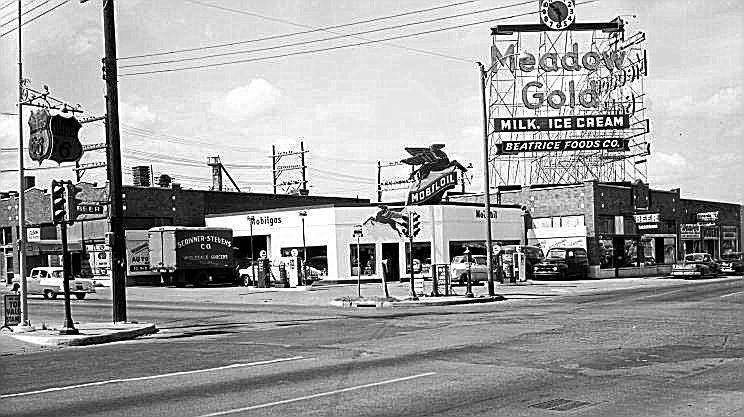
Tulsa’s Meadow Gold sign is located at 11th Street and Lewis Avenue, where it stood from the 1930s until 2004, when it was put into storage.
COURTESY, Beryl Ford Collection, Rotary Club of Tulsa
Meadow gold

The Meadow Gold sign was restored and erected atop a brick structure in 2008. Funds came from Vision 2025 as well as money raised by the Tulsa Foundation for Architecture and matching money from the U.S. Department of the Interior National Park Service Route 66 Corridor Preservation Program.
The life of the Atlas

The sign located on the Atlas Life building at Fourth Street and Boston Avenue has lit up the Tulsa cityscape since 1946. The sign was destroyed in a storm in 1998. It was restored by Claud Neon Federal Signs and reinstated on January 23, 2001. Atlas Life Insurance Co. was the original owner and occupant of the building, which today houses a Marriott Courtyard hotel.
The life of the Atlas

A detail of the Atlas Life sign illustrates Atlas holding the world, with Tulsa located on the globe.
Mayo
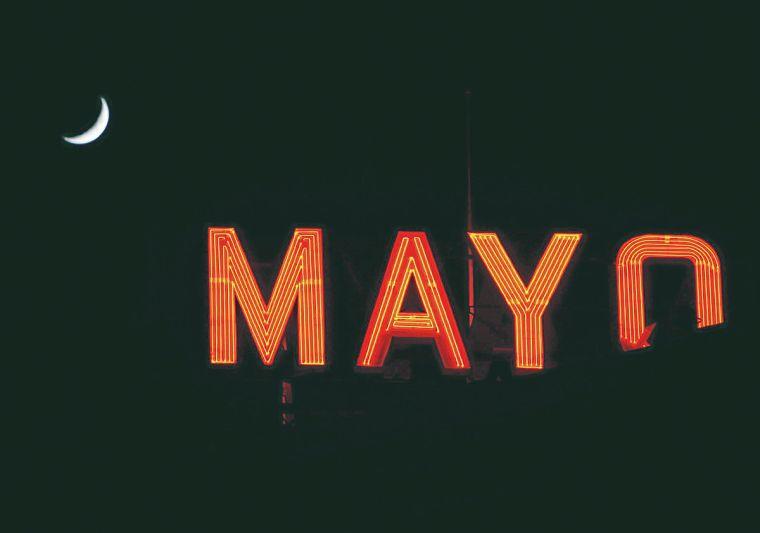
A crescent moon rises above the Mayo Hotel sign in downtown Tulsa. This iconic hotel was the tallest building in Oklahoma when it was built in 1925. Since then, it has sported an eye-catching sign on the roof. In the 1980s, the city banned rooftop signs, but Mayo’s sign was grandfathered. The ban was lifted in 2010 for businesses in the Blue Dome District.
Mayo Motor Inn

The Mayo Motor Inn was built in 1950 at 416 S. Cheyenne Ave., next to the iconic Mayo Hotel.
Cain’s Ballroom

For the Two Minutes to Tulsa heavy metal music festival at Cain’s Ballroom, Heirloom Rustic Ales and Horton Records have teamed up to release their new “Doomsday Lager.”
Tulsa World File
Cinema Circle

The Circle Cinema marquee at 10 S. Lewis Ave. announces event in 2008. The Kendall-Whittier Neighborhood Cinema opened in 1928 as Tulsa’s first suburban theater. In the 1950s and 1960s, popular monster movies and westerns were shown there. In the 1970s, the channel showed X-rated films. Local moviegoers started a fundraiser in 2002 to rebuild the dilapidated building, and the theater reopened in 2004.
Brownie Burgers

The Brownies Hamburgers sign depicts a boy with a cup of root beer and a hamburger. This popular restaurant located near 21st Street and Harvard Avenue has been open for over 60 years.
Tulsa World

The Tulsa World has installed a new sign on the facade of its building at 315 S. Boulder Ave. to mark the newspaper’s 100th anniversary in 2005.
Buffetria Nelson

The famous Nelson’s Buffeteria sign advertises the popular restaurant at 514 S. Boston Ave., which closed downtown in 2004.
Oklahoma Utility Company

The Public Service Company of Oklahoma electrified panel atop PSO’s Tulsa Power Plant sits on the west bank of the Arkansas River. The Tulsa monument was erected in 1955, replacing the non-illuminated 1923 sign. It is 40 feet high and 336 feet wide. Each letter weighs nearly 800 pounds. The panel includes 3,500 bulbs – 3,200 red and clear and 300 yellow.
Swinney Hardware
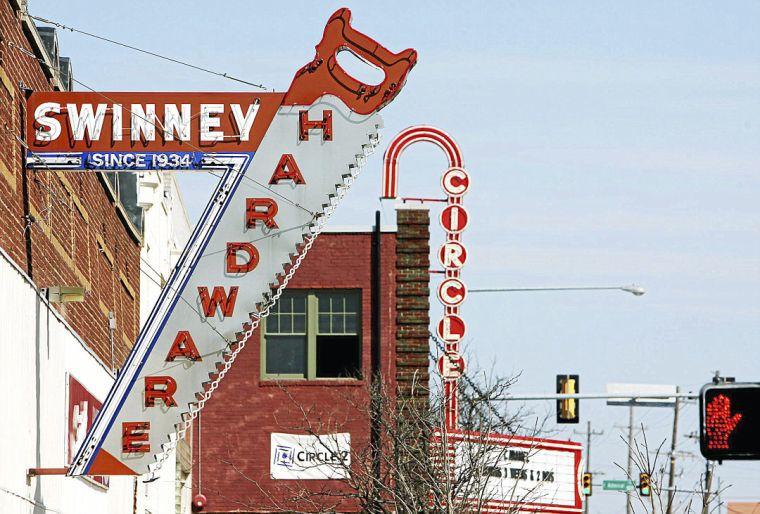
A staple of the Kendall-Whittier neighborhood from 1934 to 2008, Swinney Hardware was a haven for hard-to-find items like floor furnace replacement parts, old-fashioned polishes and pumice polishing powder.
Jim’s Coney Island

Jim’s Coney Island-Never on Sunday Greek Restaurant opened in downtown Tulsa around 1950, but is located at 1923 S. Harvard Ave. for decades.
H.L. Moss Co.

HL Moss created a legacy repairing and selling parts for electric shavers, coffee makers, lawn mowers and kitchen equipment. A coffee maker was featured on the sign in front of his store which operated at 15th Street and Utica Avenue from 1948 to 2003.
Desert Hills Motel

The Desert Hills Motel on Route 66.
Metro Dinner

The Metro Diner served comfort food on 11th Street for 22 years. Plans to expand the University of Tulsa campus spelled the end of this popular restaurant in 2006. Owner Jim Rowenhorst is pictured with the restaurant’s sign.
The fur shop

The Fur Shop sign at 520 E. Third St. Long before the building was a bar, it was the Midland Valley Railroad Depot.
Weber Root Beer

Weber’s Root Beer at 3817 S. Peoria Ave. is a must-see in the Brookside neighborhood.
The stream

The Brook Restaurant sign at 3307 S. Peoria Ave. lights up the Brookside business district. The marquee formerly advertised films at the Brook Theater, built in 1949.
Bordens Cafeteria

Bordens Cafeteria, located at 5111 S. Peoria Ave., was one of seven locally operated chains in Tulsa. The last one closed its doors in 1989.
Denver Grill

The Denver Grill, located at 112 S. Denver Ave., featured a sign with shooting stars. The restaurant opened in 1933 but closed in 2004 to make way for the BOK Center.
Lee’s bikes

Lee’s Bicycles, at 420 E. Second St., was the first business in the Blue Dome District to install a neon sign on the roof in 2010 after the City Council lifted a ban on such signs. Lee’s was founded in Tulsa in 1914.
Yokozuna

Yokozuna, at 309 E. Second St., erected a neon sign on its roof in 2010.
Lot-A-Burger

The Lot-A-Burger at 2807 Charles Page Blvd. opened in 1951.
Huey’s shoes

Larry Huey opened Huey’s Shoes at the Mayo Meadow Shopping Center, located at 21st Street and Yale Avenue, in 1956. A Walmart Neighborhood Market is located there today.
Arnie’s Bar

The Arnie’s Bar sign advertises cold beer in the Blue Dome neighborhood. The longtime watering hole and St. Patrick’s Day favorite moved downtown in 2000 after decades on 15th Street.
Woody Guthrie Center

Woody Guthrie Center
Trade Winds Motor Hotel
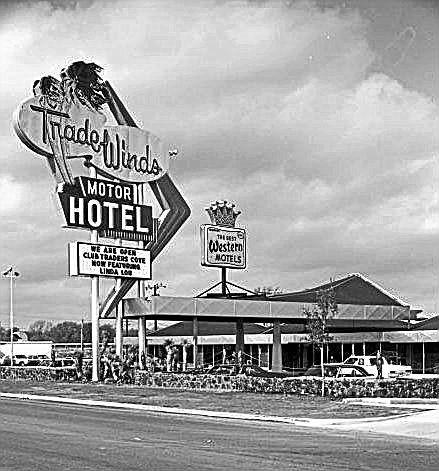
Swaying palm trees distinguish the Trade Winds Motor Hotel sign. At one time, Tulsa was home to three Trade Winds motor hotels. They were located at 51st Street and Peoria Avenue, 51st and Harvard, and 3141 E. Skelly Drive. There were also two in Oklahoma City and one in Muskogee.
Phoenix Cleaners

For nearly 70 years, the Phoenix Cleaners sign has hung at 125 E. 18th St.
Photos by photographers Matt Barnard, Stephen Pingry, Tom Gilbert and Mike Simons and Beryl Ford Collection
