


- By Nathalie Jiménez
- Corporate Producer, New York
Julieta came to the United States from Mexico 24 years ago
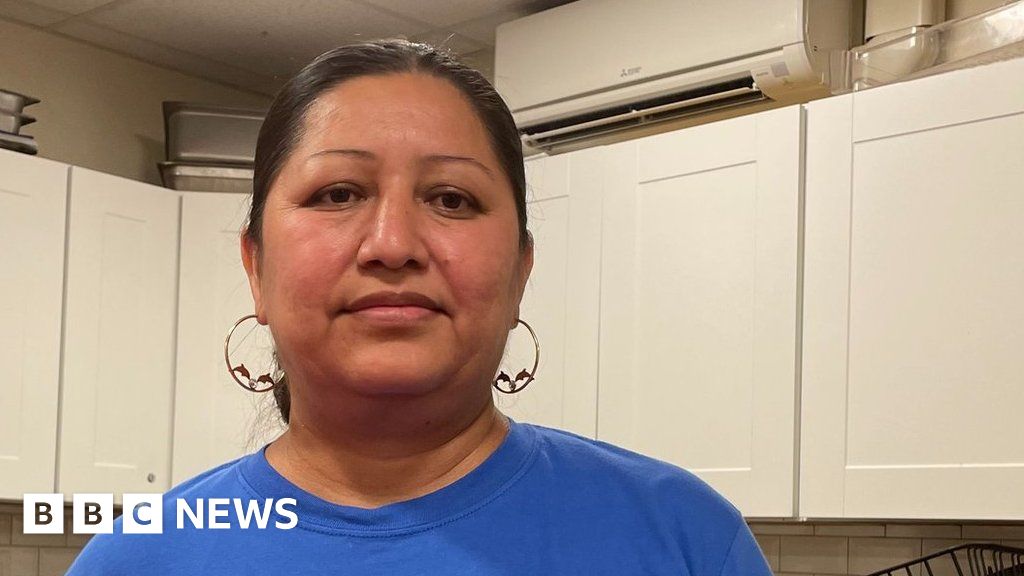
When Julieta Aquino goes to work in New York’s East Harlem neighborhood, she does so on her own terms. She decides when she works and what her salary is as a housekeeper, something she could only dream of in the past.
The change has happened since she joined Brightly Cleaning, an immigrant-led, worker-owned cooperative in New York City that is trying to turn the grueling job of housekeeping into a path to entrepreneurship .
To do this, it is adapting the franchise business model, the one that made McDonald’s a global giant, with thousands of small business owners operating under a common brand.
In this case, Co-opportunity, a New York-based nonprofit, acts as corporate overlord, giving its members access to the Brightly brand, marketing, training, and tools like an online scheduling and payment system, which would be expensive to create. independently.
In exchange, she receives 5% of gross sales, which she says goes to cover administrative costs.
This setup makes starting a business easier, allowing cleaners to become owners without having the tens of thousands of dollars needed to start a business.
But unlike a traditional franchisor, Co-opportunity is governed by its members, with the “one worker, one vote” rule that applies to decision-making.
“What we did was, in a way, reversed the franchise model. And we decided that it should belong to the workers themselves, and not to an individual who would benefit from it alone,” explains Julia Jean- François, co-executive. director of the Center for Family Life, the nonprofit that helped launch Brightly in 2018.
Brightly members seen here in 2019. Some of the members pictured have since left the group
“What we have done is decided that worker-owners can be their own engine of change, that they can take ownership of the economy in their own way. And so, with the franchise model, they take on this role and that responsibility. And now we see the incredible result of that.
There are now five Brightly locations, with dozens of worker-owners and more than 1,000 customers generating about $1 million in sales.
Small Businesses in the United States
If it is true to say that the United States is the engine of the global economy, then small and medium-sized businesses are the fuel that powers that engine.
Small businesses create nearly two-thirds of new jobs and account for 44% of U.S. economic activity. So what is the secret to their success? What challenges do they face and what are the best cities and regions for them to thrive?
Julieta, who emigrated from Mexico 24 years ago, says she was initially hesitant when she heard about the idea through a social worker.
But the worker-owner model and better pay convinced her. With Brightly, she earns $31 (£27) an hour, four times what she made in her previous job and almost double the average hourly wage of $17 for a cleaner in New York. .
Julieta now earns $31 an hour
For Julieta, who spent years caring for her child alone with bosses in charge, the highlight is setting her own schedule. “I’m giving myself time for my health and my home. I can now focus on my quality of life. It’s about me.
“It’s a wake-up call because I was like, ‘No, it’s just for people who study because they’re smart, and I’m not.’
“When I realized I could be in finance, I could be in marketing, I could lead, it’s not something impossible… I feel very proud.”
Co-ops have proven attractive to immigrants, like Julieta, who make up one in six workers in the United States and are more likely to work in low-paying service jobs than U.S.-born workers.
Immigrants make up the largest and fastest-growing segment of worker-owners in the country, according to the Institute for Workplace Democracy, which tracks cooperatives across the country.
Julia Jean-François says Brightly has “reversed the franchise model”
But these companies represent only a tiny part of the American business landscape: They number about 600 and employ about 6,000 people, according to the institute.
Cooperatives are often inefficient and have difficulty growing, says Adria Scharf, an expert at the Rutgers Institute for the Study of Employee Ownership and Profit Sharf.
“We face a problem of scale,” she says. “We hope that this franchise model will allow more worker cooperatives to grow in ways that reach and benefit many more workers, particularly those who have been marginalized and excluded from more traditional workplace settings.”
For now, however, Brightly remains the only co-op in the country that has attempted to expand through a franchise model, raising questions about how easy it will be to scale.
The Center for Family Life created Brightly from scratch, a process that required expensive legal expertise and months of negotiations with co-owners. Without significant financial support, the process can have a chilling effect on the low-income groups Brightly is trying to target.
Melissa Hoover, co-executive director of partnerships and growth at the Democracy at Work Institute, says the problem is that Brightly is ahead of its time.
“One of the reasons it’s so difficult to franchise worker-owned entities is because the system isn’t set up for it,” she says. “But with some policy adjustments, you could make capital available. You could make small business supplements and technical assistance available.
“The franchise model is actually meant to make it easier to get going in the long term. Just keep your eye on the prize, and in five to 10 years we’ll have a supporting ecosystem.”
